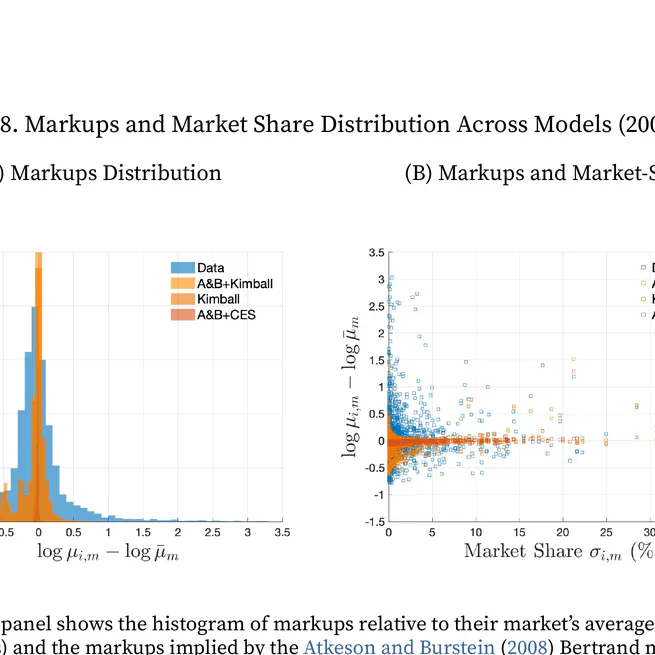
Markup Accounting
We show that markup dispersion is concentrated among similarly-sized firms and develop an oligopolistic model with demand elasticity shifters that accounts for the full joint distribution of markups and firm size.
Feb 26, 2026
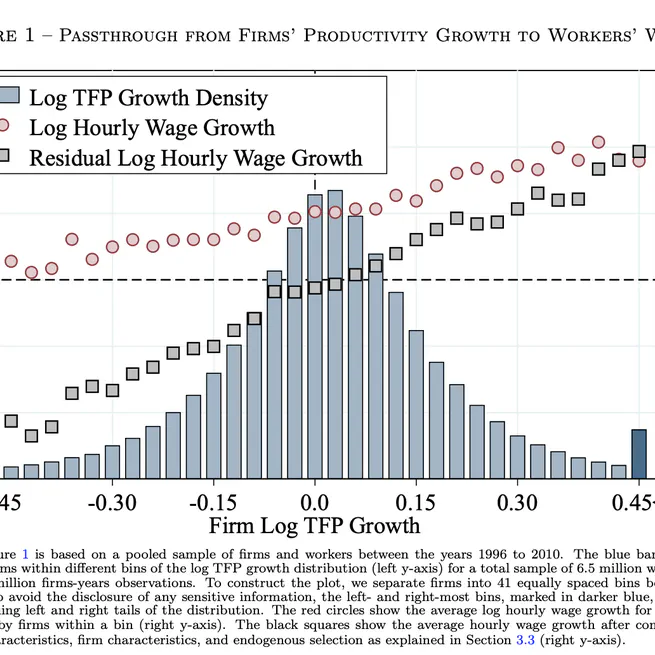
Heterogeneous Passthrough from TFP to Wages
We estimate how firms' productivity shocks pass through to hourly wages, finding an average passthrough of 0.08 that is twice as large for negative shocks, consistent with labor market power.
Feb 3, 2026
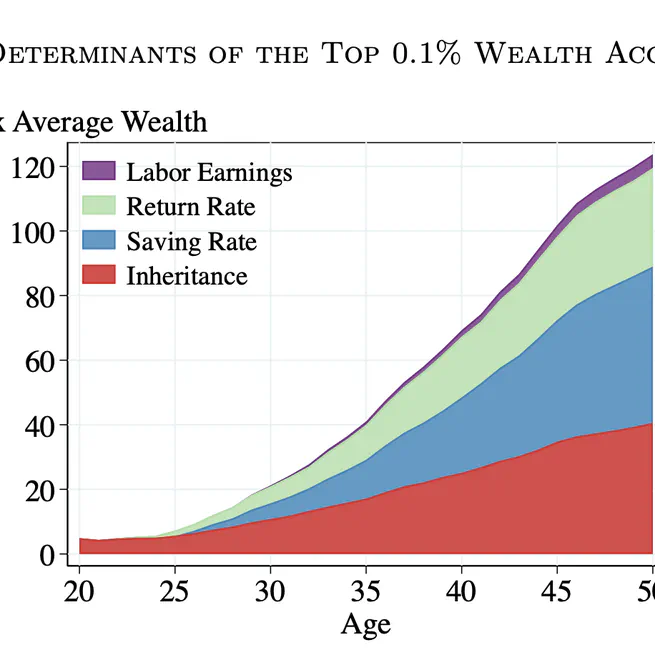
Why Are the Wealthiest So Wealthy?
We decompose the excess wealth of the top 0.1% into saving rates, inheritances, returns, and labor income using Norwegian administrative data, revealing distinct "New Money" and "Old Money" dynamics.
Dec 23, 2025

Identifying Uncertainty, Learning about Productivity, and Human Capital Acquisition
We prove identification of labor market models with human capital acquisition, learning, and sorting, and show that differences in learning opportunities help explain low measured sorting despite high firm-worker complementarity.
Nov 1, 2025
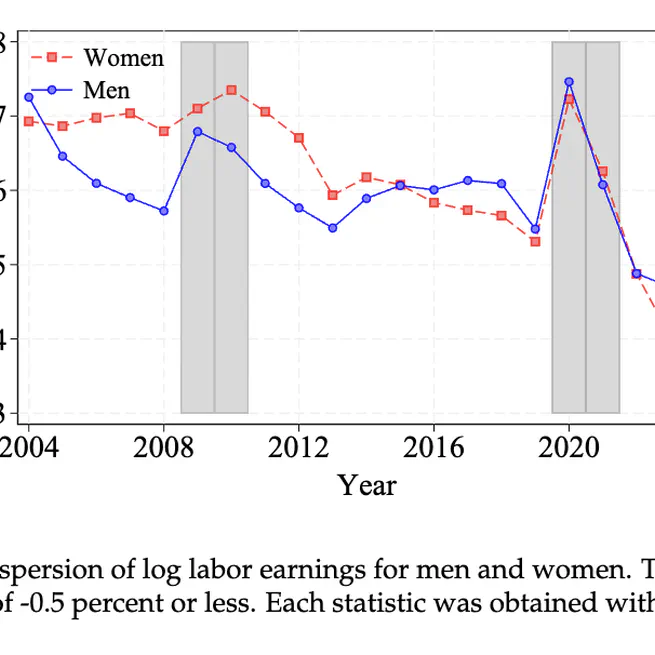
Characterizing Income Risk in Chile and the Role of Labor Market Flows
We characterize Chilean income dynamics using 21 years of administrative data, finding declining inequality but rising volatility and negative skewness driven by within-job and between-employer earnings fluctuations.
Nov 1, 2025
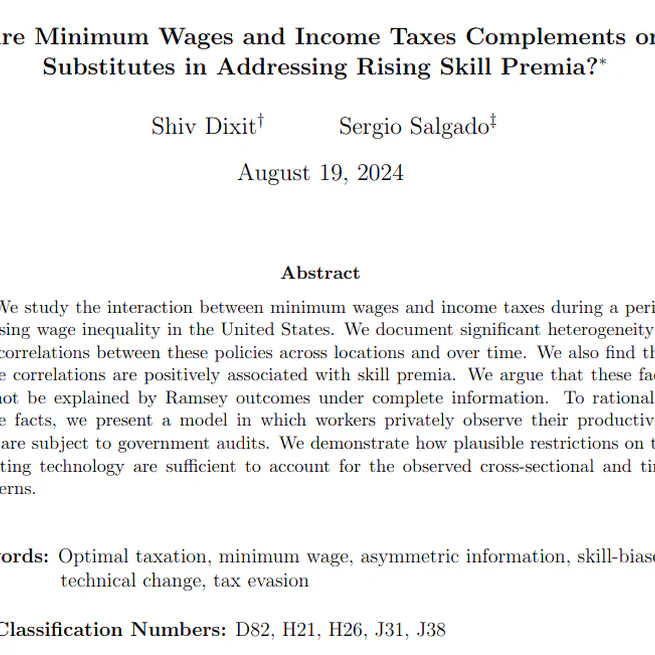
Are Minimum Wages and Income Taxes Complements or Substitutes in Addressing Rising Skill Premia?
We study the interaction between minimum wages and income taxes during rising wage inequality and show that their correlation is tied to skill premia, rationalized by a model with private productivity information.
Aug 28, 2025
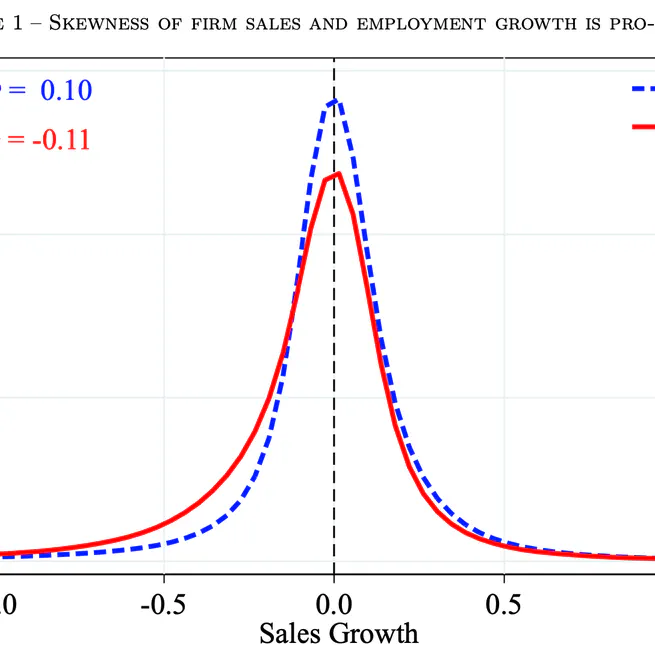
Skewed Business Cycles
We show that the skewness of firm-level growth rates is robustly procyclical across the U.S. and 52 countries, and argue that recessions combine negative mean, positive uncertainty, and negative skewness shocks.
Jun 11, 2025
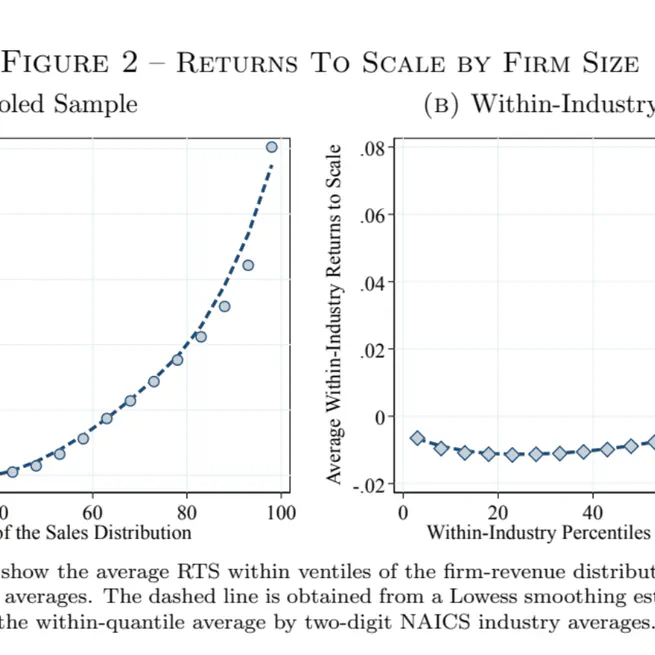
Scalable versus Productive Technologies
We disentangle returns to scale from TFP across firms and show that larger firms operate more scalable—but not necessarily more productive—technologies, amplifying efficiency losses from financial frictions.
May 6, 2025
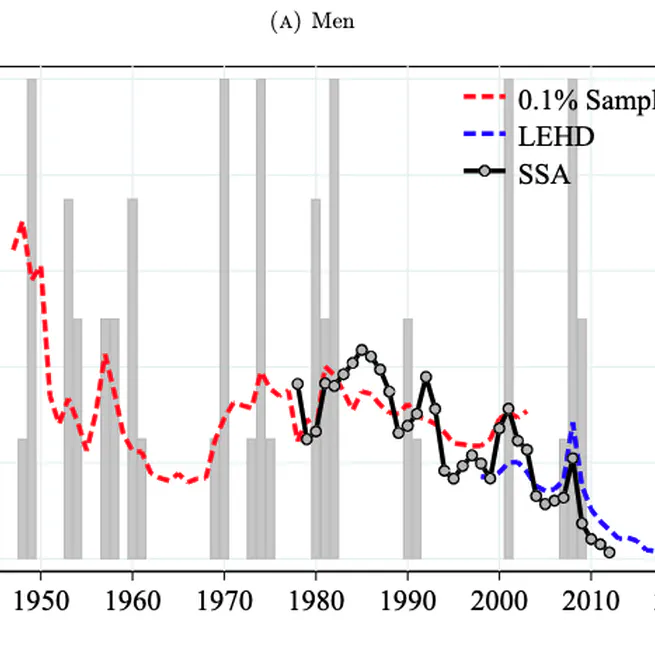
Evaluating the Great Micro Moderation
We show that U.S. worker income volatility has been stable or declining since the 1950s—contradicting survey-based beliefs—and link this trend to declining firm-side volatility.
Oct 25, 2023
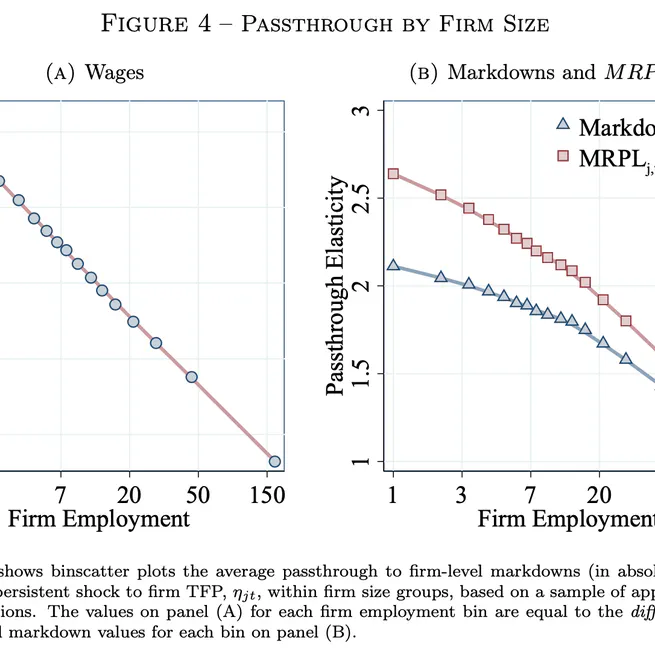
Wage Setting and Passthrough: The Role of Market Power, Production Technology, and Adjustment Costs
We develop a framework for how firm productivity impacts wages under imperfect competition, finding that labor market power and adjustment costs reduce passthrough and lower wage volatility by 77%.
Aug 17, 2023